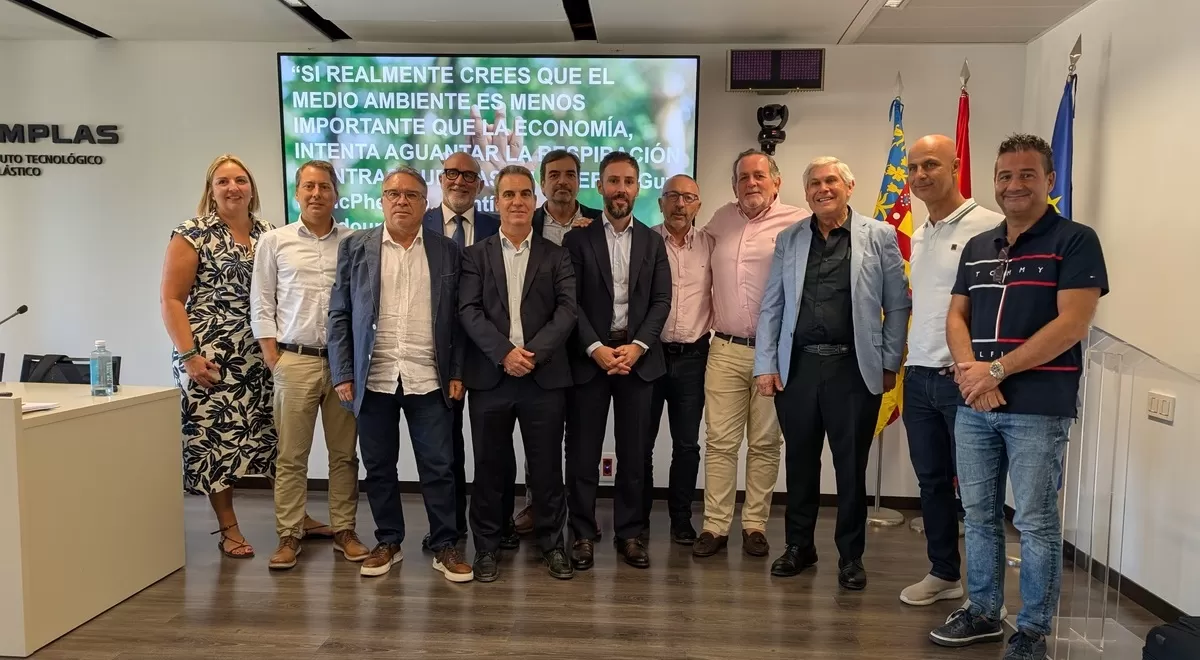
Airesa was present at the National Congress on Plastics Recycling organized by Anarpla.
June 18, 2025

Faithful to the commitment to the Circular Economy that characterizes it and assuming its
rightful
place in the sector, Airesa was present at the 4th National Congress on Plastics
Recycling
organized byAnarpla on June 5th, at the Callao
cinemas
in Madrid.
The Plastics Recycling Sector Strategy was presented there, focusing on:
- Strengthening the sector by saving resources and reducing CO₂ emissions.
- Develop a single waste market that leads to circularity, with clear and harmonized rules and technological neutrality.
- Promote demand for recycling by implementing measures such as mandatory content across all sectors, establishing Green Public Procurement, and tax incentives.
- Improve collection, sorting, and eco-design to maximize the potential of our facilities.
In the words of David Eslava, president of Anarpla, this roadmap is "the result of the joint work of the entire value chain and public administrations" and “will be key for Spain to continue being the country with the highest recycling capacity per capita in Europe, and the second in installed capacity, with 2.2 million tons, behind only Germany.”
The Plastics Recycling Sector Strategy was presented there, focusing on:
- Strengthening the sector by saving resources and reducing CO₂ emissions.
- Develop a single waste market that leads to circularity, with clear and harmonized rules and technological neutrality.
- Promote demand for recycling by implementing measures such as mandatory content across all sectors, establishing Green Public Procurement, and tax incentives.
- Improve collection, sorting, and eco-design to maximize the potential of our facilities.
In the words of David Eslava, president of Anarpla, this roadmap is "the result of the joint work of the entire value chain and public administrations" and “will be key for Spain to continue being the country with the highest recycling capacity per capita in Europe, and the second in installed capacity, with 2.2 million tons, behind only Germany.”